Book of Frank by C.A. Conrad (Reviewed by Greg Bem)

C.A. Conrad

C.A. Conrad

Book of Frank by CAConrad (Wave Books, 2010, 166 Pages)

Here is a little bit about the new edition of CAConrad’s the Book of Frank. First of all, it’s a collection of poems. It’s a book with a history. It’s got the old Frank poems in it from the previous edition (Chax Press, 2009), and it’s got a lot of new and reworked poems in it too. Some of the old poems have been completely reworked and some are the way they always were and have reached a status of the classic. But what it comes down to is this: the Wave edition of the Book of Frank is definitely something new, something monumental, something even more exciting than before. The new edition has a vast, epic narrative to it that sticks in ways it never did before; Frank’s story is now told on a much broader level, with a far more magnifying scope.

But let’s look at Frank. Who is Frank anyway, and what’s Frank’s deal? Frank is a figure that could be you or me or the person next door, down the hall, in the tree, downtown, in a parallel universe. It could be now or then or later or before. Frank’s book is timeless but constant. And Frank’s book and Frank’s life are both about trajectory. It’s the type of trajectory that birds make when they are born and learning to use their wings. There are birds in this book, too, and they are moving, but they aren’t moving on their own. The thing that’s really moving is Frank. Frank is powering his world, his creations. And it’s funny because the person who’s telling you that Frank is moving is Frank. He is the voice and he is what you know about the book. This is Frank’s book. This is Frank’s life. The spotlight is on him. Or her. However you read it.

Frank says, somewhere near the end of section three of the Book of Frank: “’part of the dream/is that you accept/your waking life as/part of the dream.’” Like human consciousness, and life itself, the book is multi-tiered, multifaceted, layered, structured by the different fabrics of reality, of different realities. The book reads like a dream. Or dreams like a dream dreams. It has within it stories of dreams within dreams. And all these dreams are moving very fast, and are very real. At its core the book is the trajectory and is the life of Frank and through its intricacies the life has three core sections. They can be roughly and haphazardly classified like all sections of all things can, labels going so far as labels do: the first section is the childhood; the second section is adventuring from childhood to adulthood. And the third section? Well, it boils down—or up—to age, experience, reflection, and scarily enough, marriage and death and doom.

At its heart, what you might find in the first section of the Book of Frank is a story about a young boy who deals with grueling parents that he can do nothing but depend on, and thus rebel against in the circumstances of such bogus family intimacy. These parents who are composing so much of Frank’s childhood for him are the ones who force him to run to his imagination for help, to run and hide, until his parents’ own deaths leave him to continue staring at the birds and the living inanimate objects who stalk the earth around him. The characters in Frank’s stories are bizarre, magical creatures that he identifies with the most. His life is aided by the constant buzz of the supernatural through caustic and chaotic super-reality of ludicrous events. As Frank makes his way in and out of the hilariously creative chasms of his own mind, he reels against the structure of a society that’s soaked in the fat and oil of religion and a god that’s haunting every corner, being screamed and hushed out of every available voice. The confusion of his family, from his mother’s scolding to his father’s reckless and queer sexuality, leaves Frank with little grounding, and so he must turn elsewhere for reliance and education; he spins around with his imagination. In the first section of Frank our hero is either a mad, youthful genius or an insane, lonely child who is attempting to get through all that innocence a person is born with using whatever tools he can dream up. He steals his mother’s eyes to see what she sees, uses a daisy for inter-dimensional snorkeling, listens to the voice of his toast, watches “a giant eat a/park bench/with her/vagina”, watches the trees wave at him, and feels the monkeys climb up his body. And he survives.

You might enter the second section with Frank’s parents recently deceased, their memories fading faster than the length of two pages of verse. You might start to realize time is an observable element now. Survival has a new, enhanced, acute meaning for Frank. The surreal events are actually part of an actual life, and Frank is aware that he is filling and fulfilling time. With the fleeting sentiments for his dominant mother now out of the picture, a vague, hurried love enters as a replacement. It is acknowledged and it is sardonically unredeeming as a “faceless date” that sighs. Love comes in the form of extremes: exhibitionism, voyeurism, and at its climax, “Frank is/roped and/gagged/on the/kitchen/floor/counting”. What Frank recognized as queer behavior by his father in the first section is transformed like a reincarnation into the oppressive sexuality of lesbian ventriloquists, an antagonistic shadowy cop, and an abused chocolate man whose semen is caramel. These sexual experiments strike as rougher on the edges, harder, more serious. But we’re in the second section so it makes sense. The world is known now, and is primal and mature; the land of childhood, of seek and discover and immerse, has been metamorphosed by time. But not entirely: “anyone who/can’t see/he’s a boy/at heart/is blind/to hearts” the book bellows.

It’s impossible to try and come up with some greater, conclusive sense of this book without feeling a little ridiculous, because that’s not what this book needs. This book, and Frank, needs you to read it, and finish it, with sincerity. There’s no hope in trying to convey the third and final section of the Book of Frank to you and feel like it’s being appropriately done. What is appropriation, anyway? Despite it all, the book concludes with the most original content in this edition, and it comes as a surprise, a jolt, that it’s the most serious section of them all. The poems become comments on tragedy, failure, and disease. Frank becomes a figment of ideals and lifestyles that are concrete and stable and horrifying, but are brittle and demand to be broken into. There are poems about the undeniable presence cancer and HIV and syphilis in an age of sexual waste, and they are matched with poems about age, reflection, about being closeted, engendered, and misconstrued. And then there are the poems that ask what is boring and how do you fight against that in a world of morality? At one point Frank wakes with revolvers for hands, and in another, “remembers/shirts of buried generals/flying in formation/over schoolyards//blowing wasps from sleeves”. Frank proves that his imagination has kept his wings flapping, kept his vision open when he has constantly been blundered and pressed by external forces that he never wanted or needed, that have kept him bludgeoned at risk of being shut down. But he survives through each flicker of symbiotic transformation, each instance of beauty, with what he learned from childhood, from his parents. The power is constant from start to finish, but what is most marvelous is Frank’s final transformation. It demands no comment. It is waiting for you. Go. Read it.

– Greg Bem

Greg Bem
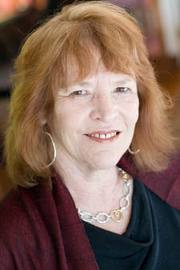
Greg Bem

Posted in Blog | Tagged , , , | Leave a comment

Judith Roche @ Doe Bay Sunday Nov 21

Judith Roche

Judith Roche

4. November 21 – Judith Roche – 7P Reading in the Doe Bay Cafe, Orcas Island, plus Open Mic. Emcee Maryna Ajaja.

Nov 21 Workshop: The Poetics of Place: A River Runs Through Us

1-4P. Suggested Donation for workshop.

Judith Roche is the author of three poetry collections, most recently, Wisdom of the Body, an American Book Award winner, has published widely in various journals and magazines, and has poems installed on several Seattle area public art projects. She has written extensively about our Northwest native salmon and edited First Fish, First People, Salmon Tales of the North Pacific Rim (also and American Book Award winner). As Literary Arts Director for One Reel she produced the Bumbershoot Bookfair and Literary Program for over twenty years. She was Distinguished Northwest Writer-in-Residence at Seattle University in 2007, taught at Cornish College of the Arts in 2009 and currently teaches at Hugo House Literary Center.

Humanities WA

Humanities WA


Judith Roche Workshop – The Poetics of Place: A River Runs Through Us

“Wendell Berry says, “If you don’t know where you are you don’t know who you are.” Not sure how entirely true this is in an existential way, but it has some truth to it. We are rooted in place– and in displacement– even if we are just passing through. But how to get to the life of a place, beyond the static and expected observations? Through readings- Snyder, Berry, Oliver, others­– and targeted exercises– we’ll approach writing about home, land, identity and­­­­ place, whether landscape of our minds, a remembered one, or a very physical and present one. This program is being presented as part of Humanities Washington’s Inquiring Mind series.


For people who want to attend any event, Doe Bay is offering a special discount: Anybody that books a stay at Doe Bay and lets them know that they are coming because of the SPLAB series will qualify for a 25% discount off of their stay. Additionally, if you pay for a 2-night stay at regular price, you can add on Sunday and Monday for FREE if you want to attend the SPLAB event (or Movie Night on Mondays, also hosted in the amazing Doe Bay Café). So just come on Sunday and get a 25% discount, or pay to stay for the weekend and add on Sunday (and Monday too!) for FREE!

Posted in Events | Tagged , , , , , , , | Leave a comment

Double-Barreled Bible: A Poet’s Quest for the Almighty by Jordan Chaney. ecetera press, 2009. 92 pages.

Jordan Chaney

Jordan Chaney

Double-Barreled Bible, the debut book of poetry from Jordan Chaney, is a complicated collection. On one hand the book exhibits an impressive quantity of verse of various styles and proportions, and on the other hand provides the reader with an introspective study of the life of Chaney and the environments he has had to survive in. At its core, the book is designed to show us Chaney’s quest to some form of enlightenment that only poetry can give, but the book’s text has several major faults that keep it, and the quest itself, from reaching any perfection. Nonetheless, the book is a solid initial push in the right direction.

Five sections, or chapters, help divide the book. The chapters have names like “toasting with Molotov cocktails” and “meditating on the sun”, and although each partition never relinquishes a clear identity on its own aside from its title, they all substantially help to break up the pacing and control the rhythm of the book as a whole. One question that remains is: where are chapters five and six? Did they get lost in the editing process? Is there some numerically-symbolic choice that simply is not as obvious as it needs to be for the point to be made? Regardless of the consistency, the schisms in the book are indeed necessary; the success of these breaks is founded in the bulk of each of the poems. For a small book of poetry, there is a lot of content present, which has positives and negatives.

Chaney writes in an encompassing, Whitman-esque style with endless lines, rare breaks, and massive amounts of imagery. These poems provide an excellent landscape for figuring out each experience the speaker has gone through, like in the poem “idyll of Vegas”, which has verses like:

there was fluorescent insignia fighting for your eyes
surrounding you at every corner every angle swallowing
you with an electric tongue and ecstatic throat
a million dull quarters dropped and a million cigarettes
were lit all at once
(33)

In the verse above, which is certainly one of the stronger in the book, the language is able to dodge clichés and keep itself focused on maintaining a stream of information that results in the elevated image. A sacrifice in punctuation allows the poem to fluidly sneak to its point without losing sincerity and speed.

Other poems, such “she’s fly”, lose their strength due to the exact same poetic decisions: “she’s like angel’s wings on babies / dangling from clouds in Raphael’s famous painting / fly like Michelangelo’s hanging masterpiece God’s creation” (58). The style of these poems may have been developed through haste or, more hopefully, through conscious process. But Chaney decided to skip out on adding several critical commas and periods in many of his poems, like this one, and the absence of finishing graces leaves the tone feeling tragic and sloppy—especially for a poet whose highest regard has been the elevation of the self through a journey paradigm.

Double-Barreled Bible is often its strongest in purveyance of legitimate language, which blends beatnik bop prosody, late slam, and contemporary hip hop together. The result is wonderfully authentic reflections on a 21st century culture, a melting pot of unstable identities that is one of the more intriguing trends and issues in America today. When Chaney uses rhyme and meter to blend language with social issues, the work is truly insightful: “and in the misery / of being caught in the guillotine of a race war / so i pace more than any one side has ever paced before” (“half-breed”, page 20). It is clear Chaney is a social poet who covers many topics. Unfortunately several topics fall flat through poetic cliché, such as his quasi-philosophical/drug attack “phone conversation”, or the poetic self-analysis in “mission statement”, poems like “half-breed” are adequate queries into a world of madness, disorientation, and befuddled lives.

It would be dis-serving to leave out any comments on the love poems in Double-Barreled Bible, which provide a significant element to Chaney as a poet and as a man on a quest. Through all of the grappling performed from page to page, Chaney spends a significant amount of energy on devotion. Through family, friends, lovers, ethnicities, and even objects of violence, Chaney’s songs invoke an almost mythological tongue of respect and obsession that makes this Double-Barreled Bible a well-rounded text. In “picket sign”, the speaker rhythmically meditates on macroscopic conflict by zeroing into objects of chaos.

Through the determination of “united states of mind”, which may be the strongest poem in the collection, Chaney uses music to merge the feminine/masculine duality into sheer beauty:

i am the sideways head with inflated cheeks
blowing Niles of sax vibrations
melodically swaying the jezebel’s hips as she moves
smoothly
against a twilight the color of ripened blackberries
and bizarre cola!
(30)

The imagery is unique and the energy is authentic. The personal fortitude is undeniable and remains an interesting approach on the muse from its regulated start to its bright, satisfying finish. Chaney’s own voice is well-defined, and with the speaker so present, the poem never lets up. It is moments like these that set aside all the more confusing and conflicted portions of the book.

The end of Double-Barreled Bible leaves the reader with a blown kiss and a step in the direction for more to come. While Chaney as journeying poet may not be as achieved, and while his success may not be as apparent as the book hopes, there are results. All in all, the moments that shine in this poetry serve as reminders that poems, and even slices of poems, acting as reflections of worlds, may be more important than the collection of poetry itself.

– Greg Bem

Posted in Blog | Tagged , , , , | 1 Comment

Interview with Sam Hamill

Sam’s at his best with this interviewer:

I was shocked at the level of ignorance and downright illiteracy in mass media, people asking me stupid questions like, “Why can’t you just leave the politics out of it?” as if there were any poems in the world that were apolitical. You can’t write about character and the human condition and be apolitical—that’s not the kind of world we’ve ever lived in.

and you can see what he thinks of the press he founded.

http://www.newpages.com/interviews/sam_hamill_copper_canyon.htm

Posted in Sponsors | Tagged , | Leave a comment